
The Beauty of Imperfection
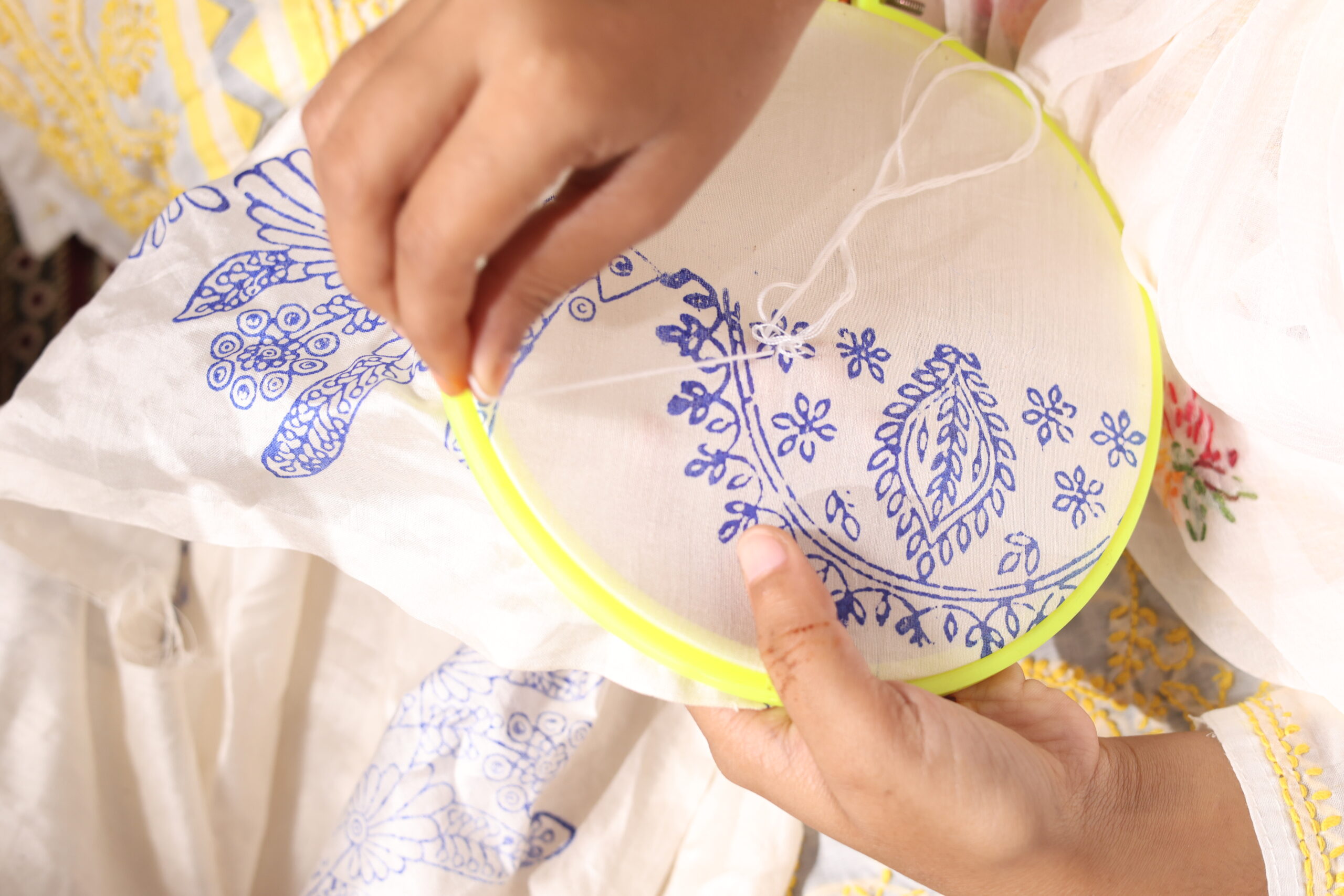
In a world of perfect symmetry, identical finishes and things made to look exactly alike, there is something quietly beautiful about an object that shows the hand that made it. A slightly uneven stitch. A variation in texture. A motif that isn’t perfectly identical to the next. These aren’t flaws. They are traces of making. Handcrafted pieces carry something that mass-produced objects often cannot: evidence of time, touch and human intention.
When Imperfection Becomes Character
Machine-made objects are designed for consistency. Every piece follows the same measurements, the same pattern and the same finish. Handmade objects work differently.
When an artisan works with a needle, thread or loom, no two pieces can ever be completely identical. The movement of the hand naturally creates subtle variations in tension, texture and placement.
And that is precisely what makes each piece distinctive. A handmade embroidered table runner may have tiny differences from another made using the same design. A woven textile may have a slightly different texture. A hand-finished edge may carry small variations that reveal the process behind it.
Instead of taking away from the object, these details give it personality.
The Human Touch You Can See
There is an intimacy to knowing that something was made by a person rather than simply produced by a machine.
Every stitch represents movement. Every motif represents skill.
Every finished piece represents time. With traditional crafts such as Chikankari, this relationship becomes even more apparent. The beauty of the embroidery lies not only in the final motif but in the countless individual stitches that come together to create it. You can often see the rhythm of the artisan’s hand in the finished textile.
That human presence is what makes handmade pieces feel warm and personal.
Why We Connect With Handmade Objects
Perhaps our attraction to handmade objects comes from something deeper than aesthetics. We value objects that feel like they have a story. A mass-produced object can be replaced easily.
A handmade piece often feels different because it carries a sense of individuality. It reminds us that someone spent time creating it, rather than simply manufacturing it. This is especially meaningful within our homes.
Our homes are filled with objects that reflect who we are—the books we collect, photographs we keep, furniture we choose and textiles we live with. Handcrafted pieces naturally become part of that story. They don’t just fill a space. They give it character.
A Slower Way of Living
The appreciation for handmade craftsmanship also reflects a growing desire to slow down. We live surrounded by fast production and constant consumption. Trends change quickly, objects are replaced quickly, and convenience often takes priority over longevity.
Handmade craftsmanship asks us to pause. It reminds us that some things take time. The hours spent embroidering a piece, weaving a textile or carefully finishing an edge are not inefficiencies. They are part of the value.
Choosing handmade is, in many ways, choosing to appreciate time as a material.
Imperfection Makes It Personal
There is something comforting about knowing that your piece is not exactly like someone else’s. A handcrafted textile may carry subtle differences that make it uniquely yours. The embroidery may have its own rhythm. The weave may have its own character.
The finish may reveal tiny traces of the person who made it. These details create a sense of connection between maker, object and owner. Over time, that connection can become even more meaningful. A handmade piece can move from being simply something you bought to becoming something that belongs to your story
Designing for the Future, Not Just the Moment
True timelessness rarely comes from perfection. It comes from pieces that continue to feel relevant as our surroundings change.
Handcrafted textiles have a natural ability to do this. Their simplicity allows them to move between styles, spaces and generations. An embroidered table runner can sit on a traditional dining table today and a contemporary one years from now. A handwoven cushion can move from one room to another. A beautifully made textile can become something that is kept, cared for and eventually passed on. This is where the idea of the heirloom becomes important. An heirloom isn’t necessarily valuable because it is old. It becomes valuable because it is meaningful enough to keep.
Celebrating the Marks of Making
At Eternite Threads, we believe that the small variations found in handcrafted textiles are not imperfections to hide. They are part of the story. They remind us that beauty doesn’t always come from uniformity. Sometimes, it comes from the little things that make a piece different – the stitch that varies slightly, the texture that isn’t completely predictable, the evidence of a human hand at work.
In a world that increasingly celebrates the perfect, perhaps there is something special about choosing the personal instead. Because the most beautiful things aren’t always the ones made perfectly. They are the ones made with care.